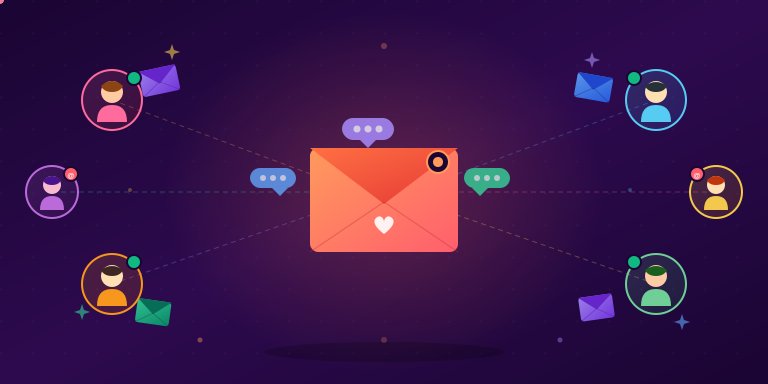
Most email programs are based on one question: How do we get more people to buy?
That’s not a bad question. But it is incomplete.
The brands that build lasting businesses don’t just convert subscribers into customers. They transform customers into people who feel connected to something. People who recommend the brand without being asked. They stay when a cheaper alternative appears in their feed. They write just to say they love what you do.
This is community. And email, used well, is one of the most underrated tools for building.
Not because it’s the most noticeable channel. That’s not it. But because it’s the only place where you have a person’s undivided attention, there’s no algorithm between you and them, and no competing posts in a sidebar. Used wisely, this is a significant advantage.
Do you have little time? Here are the key takeaways
- A community is built through consistency and voice, not just frequency: The brands whose subscribers feel like insiders stop sending emails. They intentionally send more.
- Your email list already contains your most engaged people: The fact that anyone has signed up at all is a signal worth building on.
- A shared identity is more effective than shared discounts: People stay loyal to brands that they feel like they belong to, not just brands that occasionally make them an offer.
- Two-way communication changes the relationship: By asking questions, inviting answers, and responding to feedback, the broadcast becomes a conversation.
- The important key figures look different: Open rates, response rates, and forward rates tell you more about community health than just conversion rate.
The difference between a list and a community
A list is a collection of people who have given you their email address.
A community is a group of people who feel like they belong to something.
The gap between the two does not depend on platform or tactics. It’s about how you think about the people on your list and what you want to give them beyond the reason to buy.
Most eCommerce email programs are purely transactional. Welcome Email, Abandoned Browsing, Abandoned Cart, Post-Purchase, Reclaim. Everything is optimized to move someone from one stage of the funnel to the next. This infrastructure is truly valuable and worthwhile. But if that’s all you do, you’re leaving the most sustainable part of email’s potential completely untouched.
The brands that build community through email view the inbox as a relationship channel first and a revenue channel second. Not because sales obviously don’t matter, but because they’ve discovered that it’s the relationship that makes sales repeatable.
Make your subscribers feel like insiders
The quickest way to build a community via email is to make your subscribers feel like they’re part of it.
This does not require a loyalty program or a closed member area. It requires a change in the way you frame what you share.
Instead of announcing that a product is now available, tell subscribers why you built it, what problem you were trying to solve, and what didn’t work in the three versions prior to the version they’re looking at. Instead of advertising a sale, let your list know about it before it goes live anywhere else. Instead of sharing a blog post, share the thoughts behind it, including the idea you almost addressed but didn’t.
Insider access doesn’t have to be exclusive to be useful. It just has to feel more than what a stranger gets.
Behind-the-scenes content tends to work particularly well here. Product development, packaging decisions, supplier visits, things that went wrong and how you dealt with them. People care more about the process than most founders expect, and sharing it creates a sense of shared investment in what you’re building.
It’s also worth experimenting with founder emails. Some of the most engaging emails in ecommerce are written in simple, personal language, often without images and without elaborate formatting. Just an honest message from someone who cares about what they do. If you haven’t tried this format yet, it’s worth a single test before writing it off.
Ask questions. Then actually listen.
Most email programs are one-way. The brand speaks. The subscriber receives.
Community requires the opposite.
The easiest way to change the dynamic is to ask questions and make it easier for people to answer. Not a survey with twelve questions and a submission form. Just a specific question at the end of an email: What’s the one thing else you’ve found out about it? What should we do next?
When people respond, respond. Not with an automated confirmation, but with a real answer. That doesn’t scale to 50,000 subscribers, but for most ecommerce founders, even a handful of real email conversations per month has an outsized impact on how connected that part of your list feels to you.
These people become your most vocal advocates. The ones who tell their friends, leave detailed reviews, and DM you when something lands for them. It all starts with being a brand that actually listens when someone responds.
Response-based campaigns are a good format to incorporate into your rotation. Send an email specifically designed to generate responses: “Tell us the product you would recommend to a friend” or “What is the best thing you have purchased from us and why?” People enjoy being asked their opinions, and the answers often reveal insights you can use.
Community spotlights also work well, especially for brands whose products include tools, cameras, craft supplies, and fitness gear. When you include real customers in your emails, you create social proof and signal that the brand is paying attention to the people who actually use it.
Build a voice that people recognize
Community depends on identity. And identity in emails comes from voice.
If your emails could have been written by any brand in your category, they wouldn’t build anything beyond a transactional relationship. The subscribers who become true fans can usually recognize a brand’s email address from the first sentence. There is a recognizable point of view. A consistent view of things. A tone that doesn’t change depending on whether this week’s email is promotional or informational.
Building that voice requires conscious decisions.
What does your brand actually believe about the space it occupies? What is pushing it back? What does it refuse to do even when the competition does? What is it about beyond selling products?
When the answers to these questions appear regularly in your emails, subscribers feel like they know you. Feeling like they know you is why they trust you enough to stay.
This doesn’t mean that every email has to be a manifesto. Most of these will continue to be promotional. But the voice should be consistent whether you’re launching a product or sharing a piece of content. The subscriber should feel the same presence behind every broadcast.
The metrics that tell you if it’s working
Community building is not always immediately reflected in sales. But it shows up in other numbers, and it’s worth tracking those numbers along with conversion data.
The response rate indicates whether the conversation is actually two-way. If no one writes back, the door may not feel as open as you think.
Forward rate is one of the clearest signals in email marketing. When someone forwards your email to a friend, they are recommending you to someone they trust. An increasing forward rate is a strong sign that your content is hitting the mark.
It’s also worth tracking list growth through recommendations. As you ask new subscribers how they found you, and a growing proportion say a friend sent them your email or shared it with them, the community acts as a growth channel.
And pay attention to opt-out patterns. A spike after a certain email type tells you something. The consistently low unsubscribe rates for content-related emails compared to purely promotional emails tell you otherwise. The brands that build community pay close attention to what attracts people, not just what makes them click.
Final thoughts
The most successful ecommerce email programs aren’t built by founders with the most sophisticated automation or the highest send frequency.
They were created by those who made their subscribers feel like more than just a name on a list.
This is achievable in any size. You don’t need a large audience to build a real connection via email. You need consistency, a real voice, and a willingness to treat the people on your list as participants rather than recipients.
This is where Omnisend comes into play. With segmentation tools to help you send the right message to the right people, automation to handle the transactional side so you have more room to focus on building relationships, and analytics to show you how your audience is actually engaging, it gives you the infrastructure to build sales and community at the same time.
Foundr readers also get 50% off their first three months. Just use code FOUNDER50 When you sign up and start building an email list, the person will really look forward to hearing from you.