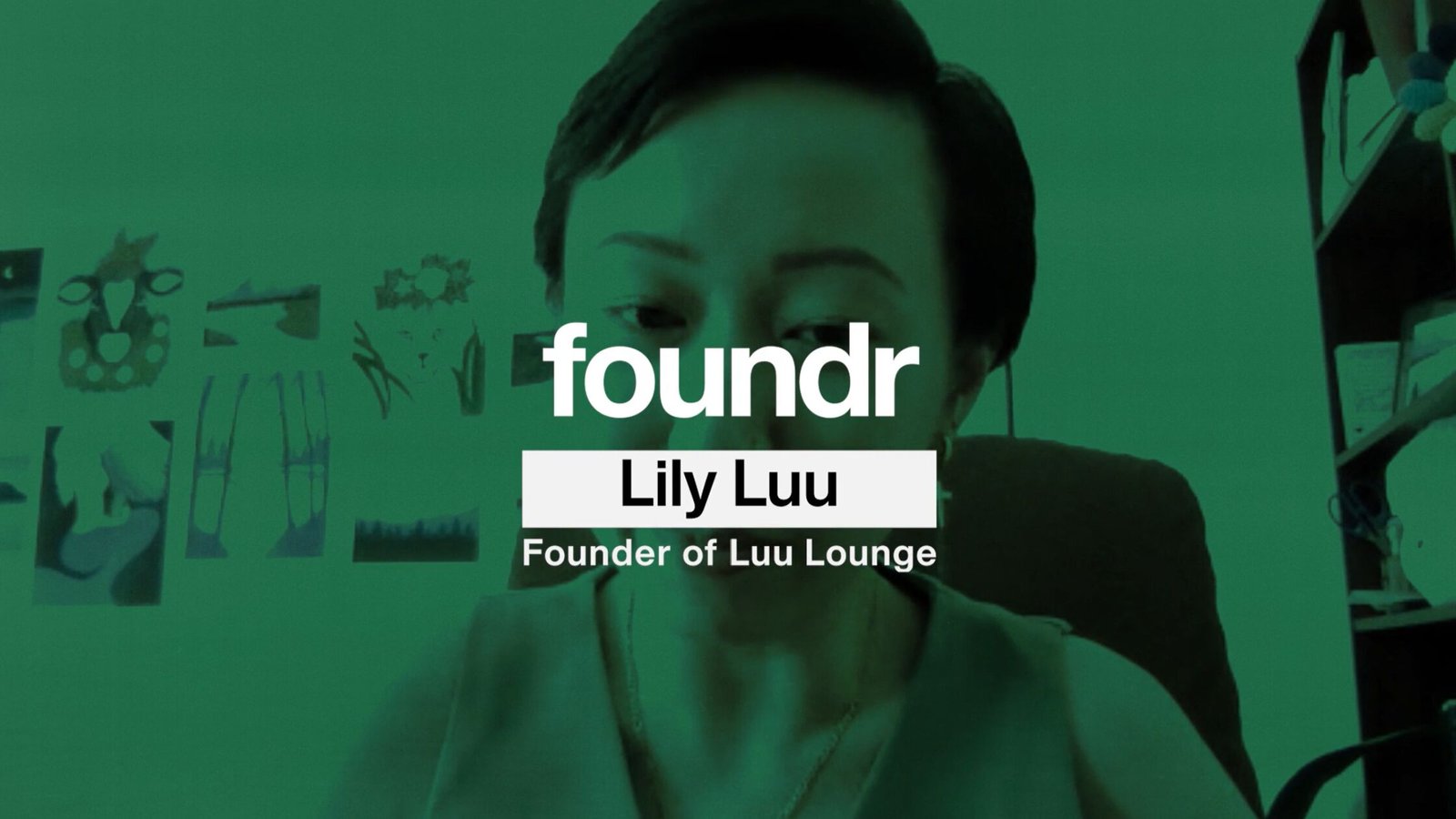
Lily didn’t want to start a clothing brand for fashion reasons. The idea came from a daily frustration that she couldn’t ignore.
While Lily worked full-time in electric vehicle infrastructure, she constantly struggled with pet hair.
“I work in electric vehicle infrastructure. Monday to Friday it’s a pleasant eight to five. I have three dogs and I was just covered in fur the whole time,” she explains.
The problem was simple, persistent and personal.
“I actually thought to myself: How could I make clothes where the hair just wouldn’t stick – or where I could just wipe it away?”
This question became the foundation of their brand. Lily began developing custom fabrics that could withstand pet hair, committing to a process that would take far longer than a typical apparel launch.
“It took me over a year trying to find the right manufacturer because my clothes are made from the custom fabric,” she says.
During this time, she chose to build publicly and openly share the process as it unfolded.
“I built in public, posted my idea on TikTok and it basically went viral.”
What followed confirmed the demand she had always suspected. When their first drop went live, the reaction was immediate.
“When the delivery came, I sold out within a few hours,” Lily remembers.
The challenge quickly shifted from proving interest to managing interest – all while working a full-time job.
Learn email marketing from scratch
As Lily got closer to launch, she faced a new challenge that went beyond fabric and manufacturing: she had to learn email marketing from scratch while working full time.
“I’m basically new to email marketing,” she explains.
Due to her demanding work Monday to Friday, time was her biggest obstacle.
“I needed something that was easy to learn – something intuitive that I didn’t have to invest a lot of time into.”
She initially started at Klaviyo with the intention of setting up emails and automations herself.
“I started with Klaviyo first. Let me continue here, write emails and do my automations,” she says.
But instead of clarity, the process became circular.
“I was kind of going around in circles and things weren’t looking the way I wanted them to.”
As their audience grew, so did their frustration.
“I felt like I was being punished for my growth.”
This experience led them to switch to Omnisend – and the difference was immediately noticeable.
“Honestly, when I switched to Omnisend, I felt like it was a lot easier to use,” explains Lily.
She moved quickly without overthinking the structure.
“I was able to put all of my automations together very quickly and have things look the way I wanted them.”
For a founder who wanted to balance a full-time job with starting a business, this simplicity was important. Omnisend helped Lily set up important systems without taking focus away from everything else she was building.
How Lily uses Omnisend every day
Day after day, Lily relies on Omnisend to maintain customer communication without requiring constant attention. With a full-time job and multiple priorities, she can set up the platform and trust it.
“I’m glad I can just set it up and leave it so I don’t have to worry about it,” she explains, describing how email and texting can run in the background once everything is set up.
Instead of manually managing campaigns, Lily uses Omnisend to support early access and launch coordination through simple automation. This straightforward structure allows Omnisend to fit into your routine.
Instead of diverting focus from product development or fulfillment, her customer communications run reliably in the background – helping her manage demand while balancing everything else.
The effect Lily sees
For Lily, the impact of Omnisend is most evident at launch. By building her audience in advance, she was able to start selling when there was already demand.
“When I started, I was about 3,000,” she explains.
Growth continued from there as the brand moved beyond development and into active drops.
Furthermore, this audience was not passive. Lily used email and SMS to coordinate exactly when and how customers could access each publication.
“I had everyone just sitting on this email list waiting for their text or email with the launch date, the time, everything,” she says, describing how anticipation grew before the products went live.
Reflecting on the launch as a whole, Lily recognizes the role the platform played in turning preparation into results.
“Omnisend was a big part of my launch,” she says, describing it as “definitely an important tool when it came to the early success of my brand.”
How startup students use Omnisend in real companies
Lily’s experience reflects the broader reality of many Foundr students who are building companies alongside full-time jobs. Because time, energy, and fault tolerance are limited, they need systems that are quick to learn, easy to implement, and reliable when it matters most.
Instead of treating email and SMS as separate, complex disciplines, founders like Lily integrate them directly into their adoption process. By setting up essential automation early, they can build audiences, coordinate demand, and manage access in advance – without constant hands-on work.
This structure allows you to concentrate on product development and execution while customer communication continues in the background.
If you want to create similar campaigns without doubling your workload, Omnisend comes in handy. Foundr readers can too receive a 50% discount on the first three months – Use code FOUNDER50 When you sign up, you’ll start creating emails that not only meet, but exceed your customers’ expectations.