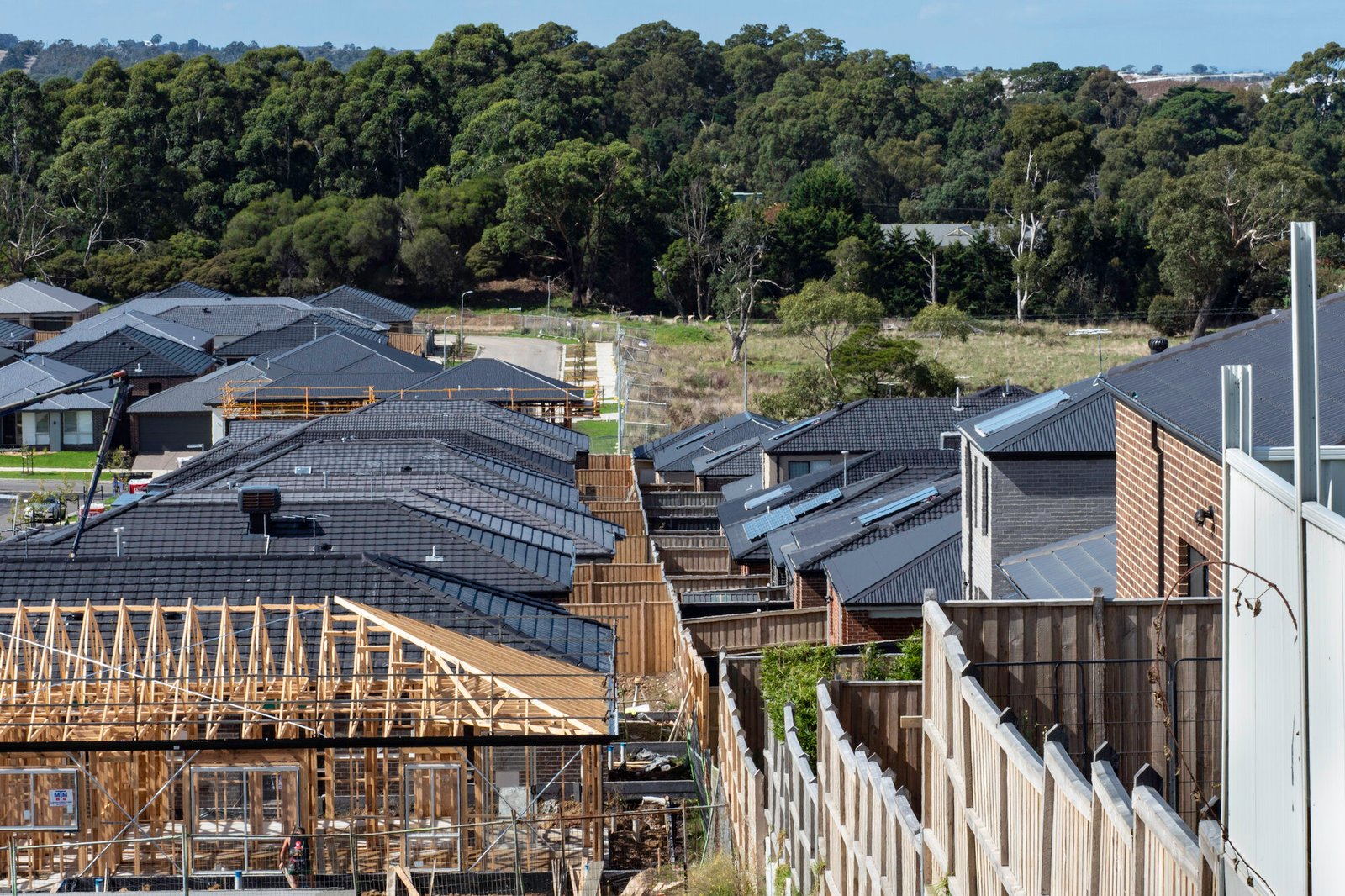
Australia needs to combine first-time buyer incentives and other housing assistance with more home building as housing affordability in the country falls to its lowest ever, the property industry warns.
The Urban Development Institute of Australia (UDIA) has called on governments to make a series of changes to housing construction across the country in response to new research revealing the poor state of the housing market.
realestate.com.au’s 2026 Housing Affordability Report found that a middle-income Australian household earning around $125,000 could only afford 12% of homes sold in the last financial year.
That was the lowest proportion on record and was dramatically lower than the 43% that could be afforded five years ago, putting home ownership almost out of reach for lower-income Australians.
A household earning $76,000 could only afford 2% of homes, while mortgage repayment for a median-priced home now consumed 35.5% of median household income – the highest share since 1989.
Homebuyers have been constrained by higher interest rates, higher costs of living and home prices at or near record levels despite recent declines in home values.
The Australian real estate industry is calling for more support for housing construction. Image: Getty
Australian house prices fell for a fifth consecutive month in August, with national house prices falling 0.2% over the month and now 2.7% below their peak in March 2026.
Despite recent declines, prices are still 1.8% higher than a year ago and 27.5% higher than five years ago, although annual growth is slowing significantly.
UDIA national president Oscar Stanley said Australia cannot solve its affordability crisis by helping more buyers compete for the same limited number of homes.
“A household earning $125,000 can only afford one in eight homes, while Australians on lower incomes are almost completely locked out,” Stanley said.
“It’s worth helping Australians overcome the deposit hurdle, but demand for help without additional supply simply pushes people further forward in the queue and makes the queue more expensive.”
“The permanent solution to housing affordability is housing abundance. Australia needs to make it faster, easier and more profitable to build homes that people can afford.”
UDIA’s Oscar Stanley says Australia cannot solve its affordability crisis by helping more buyers compete for the same limited number of homes. Image: Included
The UDIA has called on governments to link every large first-time buyer or demand-side initiative with a measurable additional supply of new housing and direct incentives to buy or invest in newly built homes.
It called for speeding up planning, environmental and utility approvals through mandatory assessment timelines, expanding investment in the infrastructure needed to develop development-ready land and requiring housing targets to reflect feasibility, infrastructure capacity and the types of homes households can afford.
It also aims to prevent the introduction of new regulatory, tax and construction standards without transparent assessments of affordability and supply impacts, and to maintain stable investment conditions that support rental housing, project pre-sales and construction financing.
In recent years, state and federal governments have expanded housing assistance to first-time buyers and other needy buyers to get to market faster.
State governments have increased their housing benefits through new and expanded grants, stamp duty reductions and other benefits.
The Federal Government has introduced the Help to Buy scheme, expanding the 5 per cent deposit scheme to help homebuyers get onto the property ladder, while overhauling the controversial negative gearing and capital gains tax benefits for property investors to create a “level playing field”.
The federal government has committed $47 billion to housing since taking office in 2022, including $37 billion to housing supply, to create an estimated 420,000 homes.
Federal Housing Minister Clare O’Neil said Australia was at risk of becoming a fundamentally less equal country, with home ownership out of reach for many.
“The challenge we face is that Australian house prices have increased by around 400% since 2000,” Ms O’Neil said.
“If this happens again in the next generation, Australia will become a fundamentally less equal country, with home ownership out of reach for too many young people.”
The comments come as the Housing Affordability Study also found that first-time buyers were taking even longer to make a deposit to purchase a home.
An average-income household that saves 20% of its income today for a 20% down payment on a median-priced home would need to save the equivalent of six years, the report said.
Get your realEstimate™
Track the value of your property and receive insights and data tailored specifically for property owners.
Report co-author and senior economist at realestate.com.au Angus Moore said the three rate hikes in February, March and May this year had significantly reduced borrowing capacity, making it harder for buyers to buy a home.
“This more than offset the income growth and decline in house prices towards the end of FY26,” he said. “As a result, housing affordability has declined across the country.”
Looking ahead, Mr Moore said affordability could improve slightly if house prices continue to fall, but it was unlikely to be a game-changer for many buyers.
“Without a significant expansion in housing supply, affordability will remain a major challenge, particularly for lower-income households,” he said.