Key insights
- AI can now compare each payroll run with your previous ones and mark anything unusual before completing.
- You don’t have to be a payroll expert to use AI to improve your payroll.
- AI is used as a “second pair of eyes”. and will not change or adjust any data.
- Use AI to set your own variance threshold (gross and/or net) makes error checking a quick, repeatable step in every payroll run.
It’s the day before payday. The numbers look right.
But are they?
If you run payroll for a company—perhaps among a dozen other tasks—you know this twinge of doubt well.
Payroll has a lot at stake and a lot of repetition, and for decades the only safety net was focus: checking everything manually, line by line, and hoping nothing slipped through.
That is changing. AI can now detect unusual salary changes before you hit submit and alert you to the likely reason.
In this article, we’ll show you how it works and how you can integrate it into your everyday life – whether you’re a finance manager, office manager, or entrepreneur who handles payroll yourself.
Here’s what we discuss:
What is a salary variance?
A salary variance is simply a change in a person’s salary from one pay period to the next.
On its own, a variance isn’t a problem – the salary changes all the time and usually for perfectly good reasons.
Legitimate reasons may include:
- Overtime, commission or bonus
- A salary increase or a change in contractually agreed working hours
- A new tax code from HMRC
- Changes to pension contributions or salary sacrifice agreements
- Entry-level workers who join during a certain period of time or leavers who receive their final salary
Then there are the causes you don’t want:
- Mistyped hours (45 becomes 54 with one tap – or even 34 if you’re one key further to the left…)
- A payment was recorded twice
- A raise was given twice or to the wrong person
- Someone remains on the payroll after leaving the company
Both lists produce the same thing on the screen: a number that is different from the last time.
The art of good payroll accounting is to differentiate the lists before payday – not after.
Why small errors in payroll accounting cause high costs– and how AI avoids this
A payroll error is rarely a disaster, but it is never in vain.
There are three metaphorical bills to pay.
First, the revision. An overpayment or underpayment usually means a correction to your next filing with HMRC, an awkward conversation about clawing back funds, or an out-of-cycle payment to get things sorted quickly. None of this is difficult, but it’s all time you didn’t want to invest.
Secondly, trust. Correct and timely payment is the most fundamental promise that a company makes to its employees. If an employee catches the error before you do, any subsequent payroll will be double-checked – and payday will no longer be the event it should be.
Third, hunting. Even if you feel something is wrong, manually searching for the cause requires sifting through timesheets, past pay stubs, and change requests. It takes seconds to make the mistake and hours to find it.
Prevention trumps all three. This is where technology comes into play – and most companies without a dedicated payroll department should consider it mandatory.
How AI captures what tired eyes miss in payroll and payroll accounting
Payroll accounting follows patterns.
Most people’s pay looks broadly similar from one period to the next, and when it changes, it’s for reasons that leave a mark – an overtime booking, a new tax law, an updated salary.
Patterns are exactly what AI is good at.
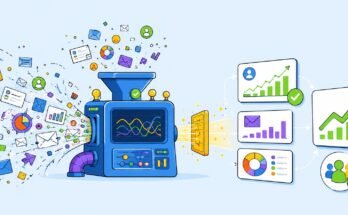
It can scan a payroll run against previous cycles, detect numbers that fall outside expected ranges, and uncover these before making the final decision – often with probable cause already attached. It’s the difference between looking for a needle and just getting a needle.
And that is not a promise of the future.
Today, Sage Copilot’s salary variance detection in Sage Payroll does just that: it flags unusual changes in gross and net pay and indicates the likely cause, including individual pay payments. This means you can complete the exam in seconds instead of hours.
What is crucial is that the AI doesn’t decide anything. It checks, compares and marks – and then returns the verdict to you.
You stay up to date on all important decisions – even if the tedious comparison work has already been done.
AI-powered Detecting salary discrepancies in action
This is what it looks like in practice.
You carry out your monthly payroll accounting as usual. Before you complete, a flag appears: Priya’s net pay is 18% higher than her current average, and the likely cause is a double overtime entry. They open their record, see the same eight hours entered twice, delete one, and complete the process. Total time: about a minute.
Now imagine the same month without the flag. Maybe you’ll spot the anomaly yourself while looking through the summary – if you know Priya’s usual pay well enough and aren’t in a hurry. Maybe not, and Priya is overpaid, and you spend part of the next month organizing the money back and explaining what happened.
Same mistake, completely different costs. The flag doesn’t make you a better payroll employee – it ensures that your attention is directed where it’s actually needed.
Make it a habit to “know it before you ship it.” Using AI for Payroll
Tools work best within a routine, so make variance checking a conscious step in your payroll rather than something you do when time permits.
Three decisions laid the foundation for this:
- Set your threshold: Define “useful” for your business. This can be a percentage variation (e.g. more than 10% up or down) or a fixed amount (any change over £100). Smaller companies often prefer a fixed amount, as one person’s overtime can cause the percentages to skyrocket.
- Decide who will investigate: If more than one person is handling payroll, agree on whose job it is to track down each lead – and give that person the authority to suspend payroll until everything is resolved.
- Explain each flag: The rule is not “fix bugs”; It says “explain any deviation beyond the threshold.” Most explanations are harmless and last ten seconds. This is the habit that works, not the habit of wasting your time.
This discipline used to be strenuous, which is why it was always relaxed when things got hectic.
With AI doing the comparison work, it’s almost effortless – and almost effortless habits are the ones that survive.
Why you don’t have to be a payroll expert to use AI
An experienced payroll manager develops a sense of what looks wrong – an instinct developed from years of payroll processing.
Most people who manage payroll in a small business never have the chance to develop this instinct, because payroll is one job among many.
This is where technology is really leveling the field.
Payroll discrepancy detection is essentially the expert eye built into the software: it knows what your payslips normally look like and will speak up if something doesn’t add up. You bring the knowledge about your company – who worked the overtime, who made the promotion – and the software brings the pattern memory.
Overall, it’s a payroll process that a specialist would recognize as robust, performed by someone who would never call themselves a specialist.
Final thoughts
Payroll errors are rarely a matter of carelessness. It’s about asking human attention to do a machine’s job.
AI-powered checks like Sage Payroll’s salary discrepancy detection turn the whole thing around: the software does the tireless comparison, and you decide.
Just start. Set your deviation threshold this week, make “Explain Every Flag” part of your next payroll run, and let the software do the checking. Payday shouldn’t be an event – and now it can be.
Frequently asked questions
The most common legitimate reasons are overtime, bonuses, pay rises, pension or salary sacrifice changes, a new tax law from HMRC and paying entry or leavers for part of a period. If none of these apply, but the salary has changed, check for input errors such as incorrectly entered hours or double payments.
Compare each person’s salary to their most recent salary trends and examine anything above a threshold you set, such as: E.g. a 10% variation or a £100 change. Payroll software with AI-powered checks, such as: B. Detecting salary discrepancies in Sage Payroll automates this comparison and flags unusual changes before you complete it.
Salary discrepancy detection is an AI-powered feature that compares each employee’s salary to their previous pay runs and flags unusual changes before completing payroll, often indicating the likely cause. In Sage Payroll, it is part of Sage Copilot and is designed to detect errors such as duplicate payments or incorrectly entered hours before payday.
Yes. Underpayments are usually made up by an additional payment and overpayments can be made up by agreement with the employee, with the correction notified to HMRC on your payslip. However, it is always easier to catch the error before payroll is completed.
No. AI in payroll handles the recurring checks—comparing numbers, identifying patterns, flagging anomalies—while the person running payroll makes all the decisions, from approving a reported variance to completing the payroll run. It acts as a second pair of eyes.